
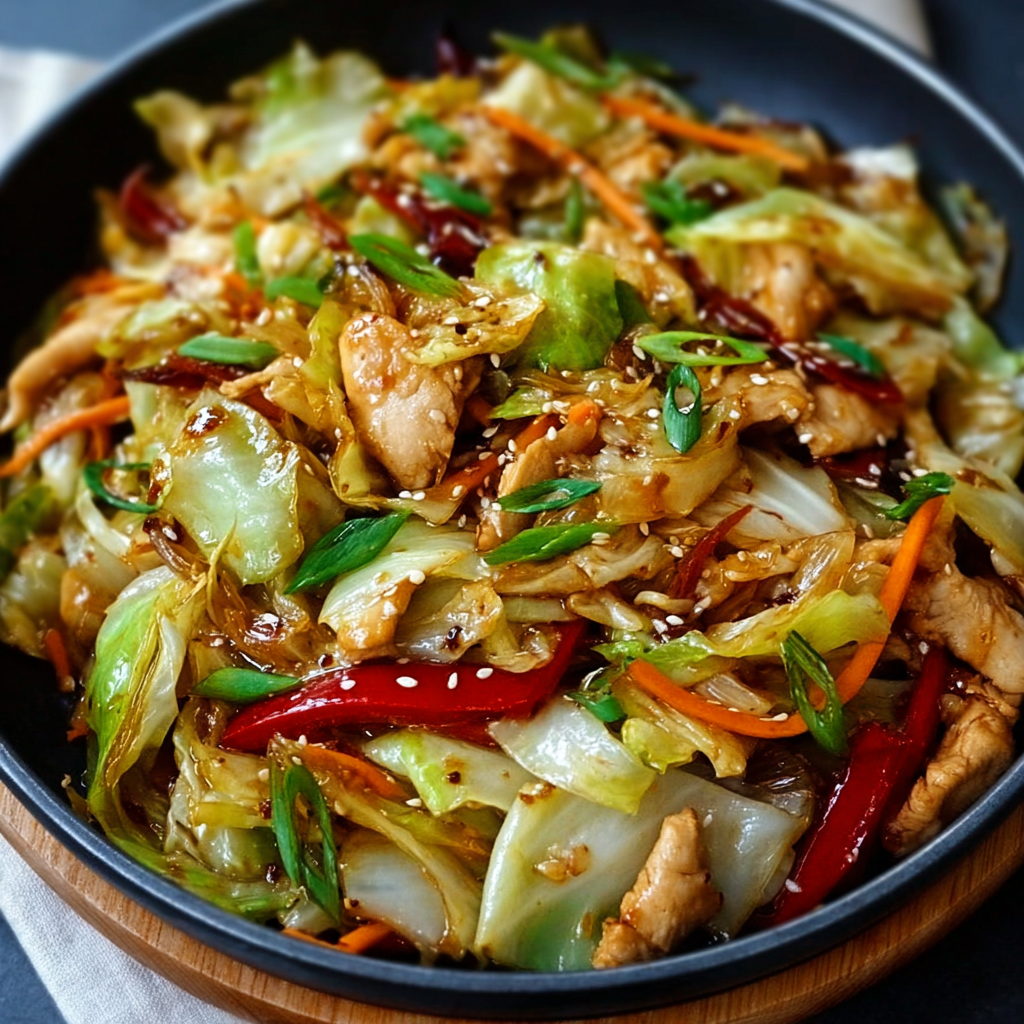
Chinese Chicken Cabbage Stir-Fry is one of the most reliable dishes in Chinese-inspired home cooking. It is fast, affordable, nutritious, and endlessly adaptable—qualities that explain why it appears in so many households, restaurants, and weeknight meal plans around the world.
This dish combines tender chicken, crisp-tender cabbage, and a savory umami sauce, all brought together using high-heat stir-frying. When done correctly, it delivers bold flavor without heaviness, making it ideal for anyone who wants a satisfying meal that still feels light and balanced.
In this in-depth guide, you’ll learn everything about Chinese chicken cabbage stir-fry: its background, ingredients, technique, variations, nutrition, storage, and troubleshooting. This is not just a recipe—it’s a complete framework for mastering one of the most practical dishes in Chinese-style cooking.
What Is Chinese Chicken Cabbage Stir-Fry?
At its core, Chinese chicken cabbage stir-fry is a high-heat cooking method applied to simple ingredients. Thinly sliced chicken is cooked quickly with cabbage, aromatics, and a light sauce in a wok or wide skillet.
What defines this dish is not complexity, but balance:
Balance between protein and vegetables
Balance between savory, salty, and aromatic flavors
Balance between speed and depth of taste
This type of dish has strong roots in Cantonese-style cooking and later evolved into many Chinese-American classics. One of the most well-known related dishes is moo goo gai pan, which helped popularize chicken-and-vegetable stir-fries in Western Chinese cuisine. Understanding that evolution helps explain why dishes like this became staples outside China.
You can read more about that culinary background here:
https://en.wikipedia.org/wiki/Moo_goo_gai_pan
Why Cabbage Plays Such an Important Role
Cabbage is one of the most important vegetables in Chinese home cooking, even though it is often underestimated. In Chinese chicken cabbage stir-fry, cabbage is not just filler—it is central to the dish’s texture and flavor.
Cabbage works so well because it:
Softens quickly under high heat
Releases natural sweetness as it cooks
Absorbs sauce without becoming mushy (when cooked correctly)
Adds volume without many calories
From a nutritional perspective, cabbage is also extremely valuable. It is rich in vitamin C, vitamin K, and dietary fiber, making this dish both comforting and health-conscious. According to the USDA’s nutrition education resources, cabbage is a low-calorie vegetable with significant micronutrient benefits, which is why it appears so often in balanced meals:
https://snaped.fns.usda.gov/resources/nutrition-education-materials/seasonal-produce-guide/cabbage
Why Chinese Chicken Cabbage Stir-Fry Is So Popular
The global popularity of Chinese chicken cabbage stir-fry comes down to a few key advantages that appeal to both home cooks and professionals.
Practical advantages
Affordable ingredients
Short cooking time
Minimal equipment required
Easy cleanup
Culinary advantages
High flavor return for little effort
Easily adjustable seasoning
Works with many variations
Lifestyle advantages
Naturally high in protein
Easy to make low-carb or low-fat
Excellent for meal prep
This combination makes the dish ideal for busy households, students, professionals, and anyone trying to cook healthier meals at home without sacrificing flavor.
Core Ingredients and Their Roles
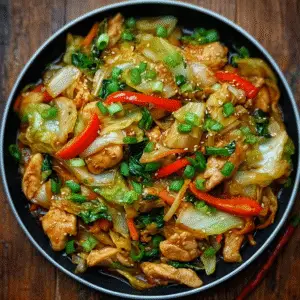
Understanding why each ingredient is used is essential to mastering Chinese chicken cabbage stir-fry.
Chicken (The Protein Base)
The most common options are:
Chicken thigh
Juicier
More forgiving if slightly overcooked
Richer flavor
Chicken breast
Leaner
Cooks very quickly
Requires careful handling to avoid dryness
Chicken is usually sliced thin and often treated with a cornstarch marinade, a technique known as velveting, which helps lock in moisture during high-heat cooking.
Cabbage (The Structural Vegetable)
Best options include:
Napa cabbage (ideal)
Green cabbage (slice thinner)
Savoy cabbage (more delicate leaves)
Cabbage should always be added after the aromatics and cooked briefly to maintain texture.
Aromatics (The Flavor Foundation)
These ingredients create the dish’s signature aroma:
Garlic
Ginger
Scallions
They must be cooked quickly to avoid burning, as burnt aromatics can ruin the entire dish.
Sauce Components (The Binding Element)
A classic Chinese chicken cabbage stir-fry sauce includes:
Light soy sauce
Oyster sauce
Rice wine or Shaoxing wine
Cornstarch slurry
A small amount of sugar
Sesame oil (added at the end)
The sauce should coat the ingredients lightly—not pool at the bottom.
Essential Stir-Fry Technique (Critical for Success)
Many people fail at Chinese chicken cabbage stir-fry not because of ingredients, but because of technique.
Stir-frying depends on:
High heat
Proper timing
Ingredient order
Professional cooks emphasize that heat management matters more than exact measurements. A widely trusted technical explanation of proper stir-fry technique can be found here:
https://www.seriouseats.com/wok-skills-101-stir-frying-basics
Key principles to remember
Preheat the wok or pan thoroughly
Never overcrowd the pan
Cook protein first
Add vegetables in stages
Sauce goes in last
Master Recipe: Chinese Chicken Cabbage Stir-Fry
Ingredients (Serves 4)
For the chicken
500 g chicken breast or thigh, thinly sliced
1 tbsp cornstarch
1 tbsp light soy sauce
1 tsp rice wine
For the vegetables
1 medium napa cabbage, chopped
3 scallions, sliced
2 cloves garlic, minced
1 tsp fresh ginger, grated
For the sauce
2 tbsp light soy sauce
1 tbsp oyster sauce
½ tsp sugar
½ cup chicken stock
1 tsp cornstarch
For cooking
2 tbsp neutral oil
½ tsp sesame oil (to finish)
Step-by-Step Instructions
Marinate the chicken
Combine chicken with cornstarch, soy sauce, and rice wine
Rest for 10 minutes
Prepare the sauce
Mix all sauce ingredients until smooth
Heat the wok
Heat until just smoking
Add oil and swirl
Cook the chicken
Spread in a single layer
Sear briefly, stir, then remove
Cook aromatics
Add garlic and ginger
Stir for 10–15 seconds
Add cabbage
Toss quickly over high heat
Allow it to wilt slightly
Combine
Return chicken
Add sauce
Stir until glossy
Finish
Drizzle sesame oil
Add scallions
Flavor Science: Why This Dish Works
The sauce in Chinese chicken cabbage stir-fry is designed to cling, not drown.
Cornstarch creates sheen
Soy sauce provides salt
Oyster sauce adds depth
Sugar balances bitterness
Stock prevents heaviness
Cabbage naturally releases water, which is why high heat is essential to prevent a watery sauce.
Popular Variations
Cantonese-Style
Light seasoning
More mushrooms
Minimal sugar
Sichuan-Inspired
Chili oil
Doubanjiang
Sichuan peppercorns
Chinese-American Takeout Style
Thicker sauce
Slight sweetness
Extra oil for shine
Healthy / Low-Carb
Less oil
Extra cabbage
Serve with cauliflower rice
Nutrition and Health Benefits
Chinese chicken cabbage stir-fry is naturally:
High in protein
Low in refined carbohydrates
Rich in fiber
Easily adjustable for sodium and fat
Approximate per serving:
Calories: 320–380
Protein: 30–35 g
Carbohydrates: 12–15 g
Storage, Meal Prep, and Reheating
Store in airtight containers for 3–4 days
Reheat quickly in a pan for best texture
Avoid freezing cabbage (texture degrades)
Common Mistakes and How to Fix Them
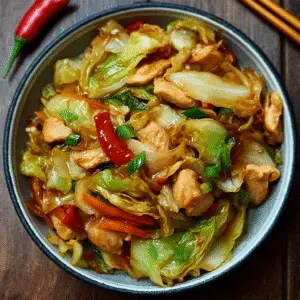
Soggy cabbage
Heat too low
Pan overcrowded
Rubbery chicken
Overcooked
No cornstarch marinade
Watery sauce
Sauce added too early
Too much liquid
Frequently Asked Questions
Can I use green cabbage instead of napa?
Yes, but slice it thinner and cook slightly longer.
What is the best chicken cut?
Thighs for juiciness, breasts for leanness.
Is Chinese chicken cabbage stir-fry healthy?
Yes, especially when cooked with minimal oil and low-sodium soy sauce.
Can I make this ahead of time?
Yes, but reheat quickly to preserve texture.
How do I keep cabbage crunchy?
High heat, short cooking time, and minimal sauce.
Final Thoughts
Chinese Chicken Cabbage Stir-Fry is a perfect example of how simple ingredients and proper technique can produce outstanding results. Once you understand the fundamentals, this dish becomes endlessly customizable and deeply reliable.
It is not just a recipe—it is a template for fast, balanced, and satisfying cooking that fits modern lifestyles while staying rooted in classic Chinese culinary principles.