
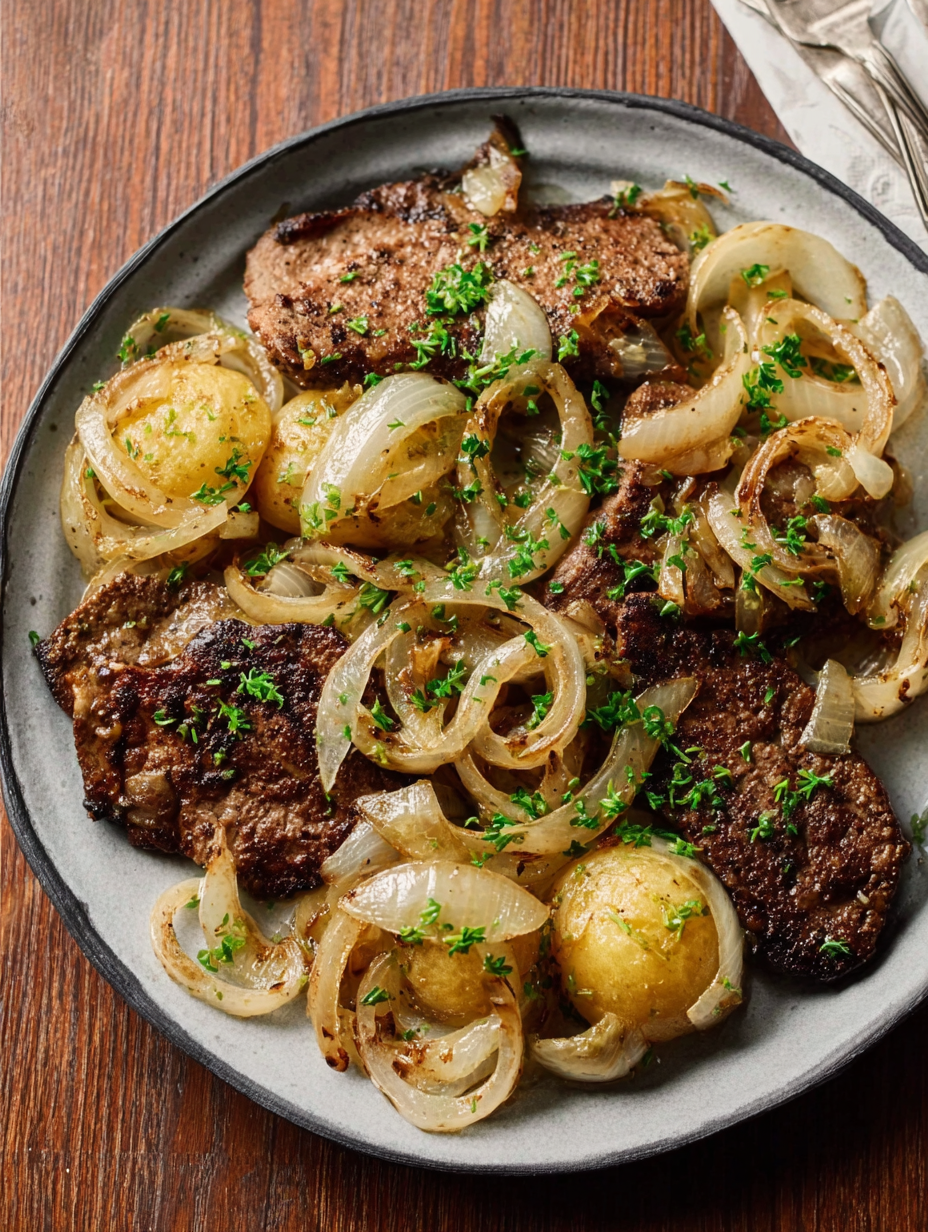
Absolute Best Liver and Onions: The Ultimate Guide to Perfect Flavor, Texture, Nutrition, and Classic Technique
Liver and onions is one of the most polarizing yet deeply traditional dishes in Western cuisine. Loved passionately by some and avoided by others, this humble meal has endured for centuries because, when prepared correctly, it is rich, tender, savory, and deeply satisfying. The absolute best liver and onions is not about toughness or bitterness — it is about balance, timing, and respect for the ingredient.
At its core, liver and onions is a celebration of simplicity. With just a few ingredients — liver, onions, fat, seasoning, and sometimes flour or gravy — this dish transforms inexpensive ingredients into a comforting, nutrient-dense meal. Across Britain, the United States, and parts of Europe, liver and onions has long been associated with home cooking, traditional diners, and family tables.
To understand why liver and onions became such a staple and how it developed across cultures, it helps to look at its historical and culinary background. A detailed overview of the dish, its variations, and its place in food history can be found here:
👉 Liver and Onions — History & Overview
Equally important is understanding liver itself — one of the most nutrient-dense foods available. The nutritional role of liver, its benefits, and how it has been used throughout human history are explained in this authoritative reference:
👉 Liver — Nutrition and Culinary Uses
What Is Liver and Onions?
Liver and onions is a classic dish made by:
Pan-frying sliced liver
Slowly cooking onions until soft and sweet
Serving them together, often with gravy or pan juices
The defining characteristics of the absolute best liver and onions are:
Tender liver, never tough or rubbery
Sweet, caramelized onions
Minimal seasoning that enhances rather than masks flavor
When done properly, liver is mild, slightly sweet, and richly savory — not bitter or overpowering.
Common Names
Liver and onions
Fried liver and onions
Calf’s liver with onions
Beef liver and onions
The History and Cultural Roots of Liver and Onions
A Dish Born of Necessity
Historically, liver and onions developed from a philosophy of nose-to-tail eating — using every part of the animal. Liver was:
Widely available
Highly nutritious
Inexpensive
Onions, meanwhile, were:
Cheap
Shelf-stable
Excellent at balancing strong flavors
Together, they formed a practical, nourishing meal.
Popularity in the 19th and 20th Centuries
By the late 1800s and early 1900s:
Liver and onions became common in working-class households
It was frequently served in diners and cafés
Doctors recommended liver for iron deficiency
This association with health and affordability cemented its place in everyday cooking.
Why Liver and Onions Has a Bad Reputation (and Why It Shouldn’t)
Many people dislike liver because they’ve only experienced it overcooked.
Common mistakes include:
Cooking liver too long
Using old or poorly sourced liver
Skipping soaking or preparation steps
When liver is overcooked:
Proteins tighten excessively
Moisture is lost
Texture becomes grainy
The absolute best liver and onions avoids these mistakes entirely.
Choosing the Right Liver for the Best Results
Not all liver is the same.
Best Types of Liver for Liver and Onions
Calf’s Liver
Most tender
Mildest flavor
Premium choice
Chicken Liver
Very tender
Rich and creamy
Smaller portions
Beef Liver
Stronger flavor
Firmer texture
Requires careful preparation
For beginners, calf’s liver is the best option.
Preparing Liver Properly (The Key to Tenderness)
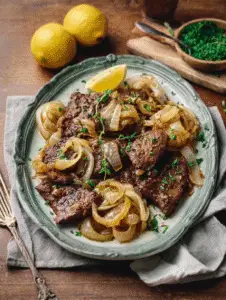
Preparation is critical.
Soaking the Liver
Soaking helps remove bitterness and excess blood.
Common soaking liquids:
Milk (most popular)
Buttermilk
Lightly salted water
Recommended soak time:
30 minutes to 2 hours
After soaking:
Rinse gently
Pat completely dry
Dry liver browns better and cooks more evenly.
Onions: The Unsung Hero of the Dish
Onions are not a side note — they are essential.
Best Onions for Liver and Onions
Yellow onions (classic)
Sweet onions (milder flavor)
Why Onions Matter
Natural sweetness balances liver’s richness
Soft texture contrasts with liver
Caramelization adds depth
Onions should be:
Cooked slowly
Golden, not burned
Soft and jam-like
The Science Behind Perfect Liver and Onions
Why Liver Overcooks So Easily
Liver is very lean
Contains little connective tissue
Cooks rapidly
Optimal cooking time:
1–2 minutes per side, depending on thickness
Ideal Doneness
Slightly pink inside
Soft when pressed
Juices still present
Well-done liver is almost always tough.
Absolute Best Liver and Onions Recipe (Step-by-Step)
Ingredients (Serves 2)
450 g calf’s liver, sliced
2 large onions, thinly sliced
½ cup milk (for soaking)
½ cup flour
Salt and black pepper
2 tbsp butter
1 tbsp oil
Instructions
1. Prepare the Liver
Soak liver in milk for 1 hour
Rinse and pat dry
Season lightly with salt and pepper
Dredge lightly in flour
2. Cook the Onions
Heat 1 tbsp butter in a pan
Add onions with a pinch of salt
Cook over medium-low heat 20–25 minutes
Remove and keep warm
3. Cook the Liver
Heat oil and remaining butter
Cook liver 1–2 minutes per side
Do not overcrowd pan
4. Combine and Serve
Return onions to pan
Toss gently with liver
Serve immediately
Common Mistakes to Avoid
Overcooking liver
Skipping soaking
Cooking onions too fast
Using high heat throughout
Small errors make a big difference.
Gravy or No Gravy?
Both approaches are traditional.
With Gravy
Use pan drippings
Add stock or broth
Thicken lightly with flour
Without Gravy
Let onions and butter shine
Cleaner, purer flavor
Choose based on preference.
Flavor Profile of the Absolute Best Liver and Onions
Taste
Rich
Savory
Mildly sweet
Texture
Tender liver
Silky onions
Aroma
Warm
Comforting
Slightly earthy
When cooked correctly, liver is not bitter.
Nutrition and Health Benefits of Liver and Onions
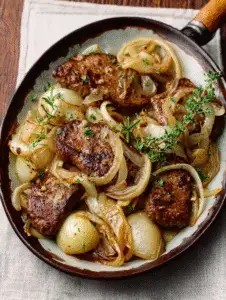
Liver is one of the most nutrient-dense foods available.
Nutritional Highlights
Extremely high in iron
Rich in vitamin A
Excellent source of B12
High-quality protein
Onions contribute:
Antioxidants
Fiber
Anti-inflammatory compounds
This makes liver and onions both hearty and nourishing.
Is Liver and Onions Healthy?
Yes — when eaten in moderation.
Health Considerations
Very high in vitamin A
Best eaten occasionally, not daily
Ideal for iron deficiency
Consult a healthcare professional if consuming liver frequently.
Best Side Dishes for Liver and Onions
Classic sides include:
Mashed potatoes
Boiled potatoes
Steamed green beans
Peas
These sides complement the richness of liver.
Regional Variations of Liver and Onions
United Kingdom
Calf’s liver
Onion gravy
United States
Beef liver
Flour-dredged and fried
France
Liver with caramelized onions
Sometimes with vinegar
Modern Twists on Liver and Onions
Contemporary adaptations include:
Liver with balsamic onions
Liver with bacon
Liver pâté-style presentations
These variations modernize the dish without losing tradition.
Storage and Reheating
Best eaten fresh
Reheating risks toughness
If reheating, use very low heat
Avoid microwaving.
FAQs About Liver and Onions
Why soak liver in milk?
To reduce bitterness and improve texture.
Can liver be eaten pink?
Yes — slightly pink is ideal.
Is liver safe to eat?
Yes, when fresh and properly cooked.
Why does liver taste bitter?
Usually from overcooking or poor preparation.
Why Liver and Onions Still Matters Today
In an era of processed foods and rising costs, liver and onions represents:
Sustainability
Nose-to-tail cooking
Nutritional efficiency
It reminds us that traditional foods often exist for good reason.
Final Thoughts
The absolute best liver and onions is not about forcing yourself to eat something unpleasant. When prepared with care, liver becomes tender, flavorful, and deeply satisfying. Combined with sweet onions and proper technique, this classic dish deserves respect — not fear.