
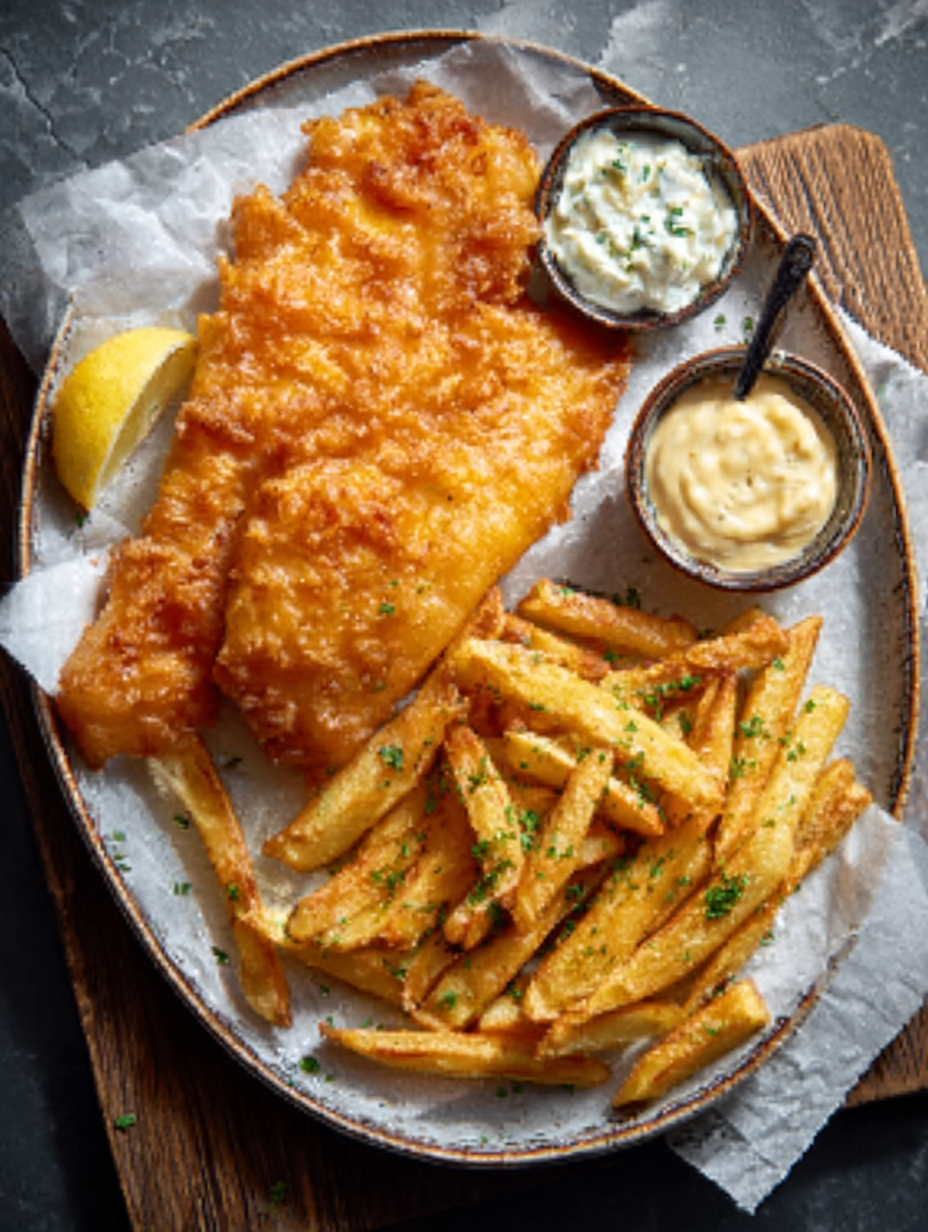
Fish and Chips: The Ultimate Guide to History, Ingredients, Batter, Frying Techniques, Nutrition, and Variations
Fish and chips is one of the most iconic dishes in British cuisine and one of the most recognizable comfort foods in the world. Simple, filling, and deeply satisfying, this classic pairing of battered fried fish and crispy potatoes has transcended its humble origins to become a global symbol of British food culture.
Served wrapped in paper, sprinkled with salt and vinegar, and often eaten by the seaside or from a local takeaway, fish and chips is more than just a meal — it is a shared cultural experience. Despite having only a few core ingredients, achieving perfect fish and chips requires careful technique, high-quality produce, and an understanding of tradition.
To fully appreciate the dish, it helps to explore its background and evolution. A detailed overview of the origins, history, and cultural role of fish and chips can be found in this authoritative reference:
👉 Fish and Chips — History & Overview
Equally important is understanding the main ingredient — fish. The culinary and nutritional importance of fish, along with commonly used species, is explained in this trusted resource:
👉 Fish — Culinary Uses and Nutrition
What Is Fish and Chips?
Fish and chips is a traditional British dish consisting of:
White fish coated in batter
Deep-fried until golden and crisp
Served with thick-cut fried potatoes
The defining qualities of authentic fish and chips are:
A light, airy batter
Moist, flaky fish inside
Crisp exterior
Soft, fluffy chips
Unlike many modern fried foods, traditional fish and chips prioritizes texture balance over heavy seasoning.
Common Names
Fish and chips
Chippy tea
Fish supper
The Origins and History of Fish and Chips
Jewish and European Influences
The origins of fish and chips trace back to 19th-century Britain, but the dish is the result of cultural fusion rather than a single invention.
Key influences include:
Sephardic Jewish immigrants, who introduced battered fried fish
Potatoes, which became a staple after spreading from Europe
Industrial frying methods
Fried fish was already popular among Jewish communities in London, while fried potatoes were common in northern England.
Industrial Revolution and Popularity
During the Industrial Revolution:
Urban workers needed cheap, filling food
Fish and potatoes were widely available
Frying provided quick, hot meals
By the late 1800s, fish and chips shops — known as chippies — began appearing across Britain.
National Symbol
By the early 20th century:
Fish and chips was considered a national dish
It remained widely available during wartime
It became associated with working-class culture
Unlike many foods, fish and chips was not rationed during World War II, further cementing its cultural importance.
Why Fish and Chips Became So Popular
Several factors explain the lasting popularity of fish and chips:
Affordability: Accessible to all social classes
Simplicity: Few ingredients, straightforward preparation
Portability: Easy to eat from paper wrapping
Comfort: Warm, filling, familiar
Even today, it remains a staple of British takeaway culture.
Traditional Fish Used in Fish and Chips

Choosing the right fish is essential.
Classic Fish Varieties
Cod
Haddock
These fish are favored because they:
Have mild flavor
Flake easily when cooked
Hold moisture during frying
Alternative Fish Options
Pollock
Whiting
Hake
Sustainable choices are increasingly encouraged in modern kitchens.
The Importance of Batter in Fish and Chips
The batter defines the dish.
Traditional Batter Ingredients
Flour
Liquid (water, milk, or beer)
Salt
Why Beer Batter Is Popular
Carbonation creates lightness
Alcohol evaporates quickly
Adds subtle flavor
A good fish and chips batter should:
Be thin enough to coat evenly
Puff during frying
Stay crisp after cooking
The Science Behind Perfect Fish and Chips
What Happens During Frying
Hot oil instantly seals the batter
Steam escapes, creating bubbles
Moisture stays inside the fish
Ideal Frying Temperature
350–375°F (175–190°C)
Too cool:
Greasy batter
Too hot:
Burnt exterior, raw fish
Chips: The Other Half of Fish and Chips
Chips are not French fries. Traditional British chips are:
Thick-cut
Soft inside
Lightly crisp outside
Best Potatoes for Chips
Maris Piper
King Edward
Russet potatoes
High starch content is key.
How to Make Traditional Chips
Double-Cook Method
First cook at low temperature (blanching)
Rest and drain
Second fry at high temperature
This creates:
Fluffy interior
Crisp exterior
Traditional Cooking Fat
Historically, fish and chips were cooked in:
Beef dripping
Lard
Modern alternatives include:
Vegetable oil
Sunflower oil
Traditional fats provide deeper flavor but are less common today.
Step-by-Step: Classic Fish and Chips Recipe
Ingredients (Serves 2–3)
Fish
2–3 fillets of cod or haddock
1 cup flour
1 cup cold beer or sparkling water
Salt
Chips
4 large potatoes
Oil or fat for frying
Instructions
Prepare the Chips
Peel and cut potatoes into thick strips
Rinse to remove starch
Fry at 325°F (165°C) for 5–6 minutes
Remove and rest
Prepare the Batter
Mix flour, salt, and cold liquid
Whisk until smooth
Fry the Fish
Dust fish with flour
Dip in batter
Fry at 375°F (190°C) until golden
Finish the Chips
Fry again at high heat until crisp
Serve immediately.
Classic Accompaniments
Traditional fish and chips are served with:
Salt
Malt vinegar
Lemon wedges
Popular sides:
Mushy peas
Tartar sauce
Pickled onions
Nutrition and Health Considerations
Fish and chips is indulgent but nutritionally valuable.
Nutritional Benefits
High-quality protein
Omega-3 fatty acids
Carbohydrates for energy
Fish is widely recognized as a nutrient-dense food:
Supports heart health
Provides essential minerals
Healthier Adjustments
Use sustainable fish
Drain excess oil
Serve with vegetables
Regional Variations of Fish and Chips
England
Cod or haddock
Malt vinegar
Scotland
Haddock common
Often includes brown sauce
Ireland
Similar style
Thicker batter
Australia & New Zealand
Local fish varieties
Lemon and tartar sauce
Modern Variations of Fish and Chips
Contemporary adaptations include:
Gluten-free batter
Panko-crusted fish
Oven-baked versions
Air-fried chips
These modern takes aim to reduce fat while preserving flavor.
Common Mistakes to Avoid
Using wet fish
Warm batter
Crowding the fryer
Skipping the double fry
Fish and Chips vs Other Fried Fish Dishes
| Dish | Batter | Chips |
|---|---|---|
| Fish and chips | Light batter | Thick-cut |
| Tempura | Ultra-light | None |
| Fish fry (US) | Cornmeal | Fries |
FAQs About Fish and Chips
What fish is best for fish and chips?
Cod and haddock are traditional.
Why is batter sometimes soggy?
Oil temperature too low.
Is fish and chips healthy?
In moderation, yes.
Can it be baked instead of fried?
Yes, but texture changes.
Cultural Significance of Fish and Chips
Fish and chips represents:
Working-class heritage
National pride
Culinary tradition
It appears in:
British literature
Films and television
Seaside culture
Few dishes are as closely tied to national identity.
Final Thoughts
Fish and chips has endured for over a century because it respects simplicity while rewarding technique. With just fish, potatoes, batter, and oil, this dish demonstrates how modest ingredients can create something extraordinary.
When prepared with care — fresh fish, cold batter, correct oil temperature — fish and chips becomes more than takeaway food. It becomes a celebration of tradition, comfort, and craftsmanship.