
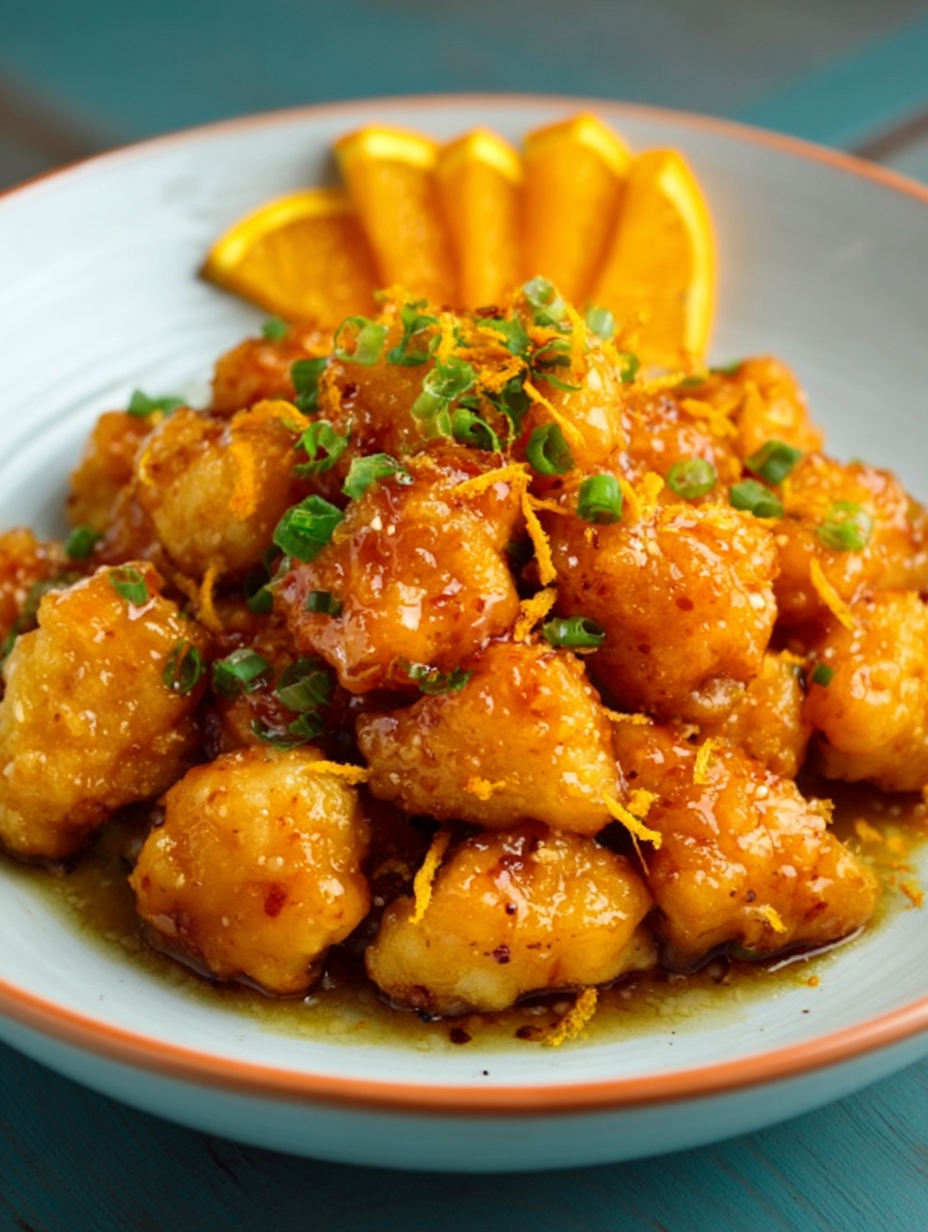
Orange Chicken: The Ultimate Guide to Origins, Ingredients, Recipe, Sauce, Nutrition, and Variations
Orange Chicken is one of the most recognizable and beloved dishes in Chinese-American cuisine. Sweet, tangy, sticky, and lightly spicy, it has become a staple on takeout menus, food courts, and home dinner tables across the United States and beyond. Crispy battered chicken coated in a glossy orange-infused sauce delivers a bold contrast of textures and flavors that makes this dish instantly satisfying.
Despite its popularity, orange chicken is often misunderstood. Many assume it is a traditional Chinese dish, while others view it as fast food with little culinary depth. In reality, orange chicken represents an important chapter in the evolution of immigrant cuisine — a dish shaped by cultural adaptation, ingredient availability, and American taste preferences. Understanding where it comes from and how it’s made reveals why it has endured for decades.
A clear historical overview of orange chicken, including its Chinese-American roots and how it differs from traditional Chinese dishes, is documented in this reference:
👉 Orange Chicken — History & Overview
To better appreciate the foundation of the dish — chicken itself — it’s also useful to understand the culinary and nutritional role of chicken as a global protein. This authoritative resource explains the versatility and importance of chicken in world cuisines:
👉 Chicken — Culinary Uses and Nutrition
What Is Orange Chicken?
Orange chicken is a dish made from bite-sized pieces of chicken that are:
Lightly battered
Deep-fried until crispy
Tossed in a sweet, citrus-based sauce
The sauce typically combines:
Orange juice or orange zest
Sugar
Soy sauce
Vinegar
Garlic
Ginger
The result is a dish that balances sweetness, acidity, and umami.
Common Names and Variations
Orange chicken
Chinese orange chicken
Crispy orange chicken
American-style orange chicken
While visually similar to dishes like General Tso’s chicken or sweet and sour chicken, orange chicken has a distinctly citrus-forward flavor profile.
The Origins and History of Orange Chicken

Chinese-American Roots
Unlike many traditional Chinese dishes, orange chicken was developed in the United States. It emerged as part of Chinese-American cuisine, a culinary tradition created by Chinese immigrants adapting their cooking to local ingredients and American tastes.
Key historical factors include:
Limited access to traditional Chinese ingredients
The need to appeal to non-Chinese diners
The popularity of sweet and fried foods in the U.S.
By the late 20th century, orange chicken became widely associated with Chinese-American restaurants and mall food courts.
Popularization in the U.S.
Orange chicken achieved mainstream fame in the 1980s and 1990s, particularly through fast-casual restaurant chains. Its success was driven by:
Familiar sweetness
Crispy texture
Bold orange aroma
Visual appeal
Over time, it became one of the most ordered Chinese-American dishes in the country.
Why Orange Chicken Became So Popular
Several elements explain the enduring popularity of orange chicken:
Sweet-savory balance that appeals to a wide audience
Crispy texture from deep frying
Citrus aroma that feels fresh and vibrant
Consistency across restaurants and regions
Unlike more subtle traditional dishes, orange chicken delivers immediate flavor impact.
Key Ingredients in Orange Chicken Explained
Understanding each ingredient helps you recreate orange chicken successfully at home.
Chicken
Usually boneless, skinless chicken breast or thigh
Thigh meat provides more juiciness
Cut into uniform bite-sized pieces
Batter and Coating
Cornstarch or flour
Egg or water
Creates a crisp exterior
Orange Sauce Components
Orange juice or zest
Sugar or honey
Soy sauce
Rice vinegar
Garlic
Ginger
Each element contributes to the dish’s signature sweet-tangy taste.
The Science Behind Crispy Orange Chicken
The defining feature of orange chicken is its crispy exterior combined with a sticky sauce.
Why Frying Works
High heat rapidly evaporates surface moisture
Starch gelatinizes, forming a crisp shell
Oil seals the chicken
Why the Sauce Clings
Sugar thickens when heated
Cornstarch slurry creates gloss
Acid balances sweetness
Timing is critical — the chicken must be sauced just before serving to avoid sogginess.
Classic Orange Chicken Recipe (Step-by-Step)
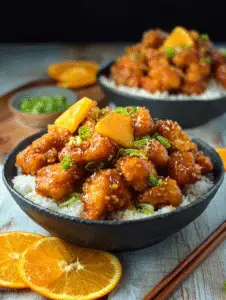
Ingredients
Chicken
1½ lb boneless chicken
1 cup cornstarch
2 eggs
Oil for frying
Orange Sauce
½ cup orange juice
Zest of 1 orange
½ cup sugar
¼ cup soy sauce
2 tbsp rice vinegar
2 cloves garlic, minced
1 tsp grated ginger
1 tbsp cornstarch + 2 tbsp water
Instructions
1. Prepare the Chicken
Cut chicken into bite-size pieces
Coat in cornstarch
Dip into beaten eggs
2. Fry the Chicken
Heat oil to 350°F (175°C)
Fry until golden and crispy
Drain on paper towels
3. Make the Sauce
Combine all sauce ingredients
Simmer until thick and glossy
4. Combine
Toss fried chicken in sauce
Serve immediately
Pro Tip: Add sauce gradually to preserve crispness.
Common Mistakes to Avoid
Overcrowding the fryer
Using cold oil
Over-thickening the sauce
Letting chicken sit in sauce too long
Flavor Profile of Orange Chicken
Taste
Sweet
Tangy
Mildly savory
Texture
Crispy exterior
Tender interior
Sticky glaze
Aroma
Bright citrus
Garlic and ginger
Nutrition and Health Considerations
Orange chicken is indulgent but can fit into a balanced diet.
Nutritional Highlights
High protein from chicken
Carbohydrates from sauce and batter
Moderate fat from frying
Chicken is a well-documented source of lean protein, vitamins, and minerals, as outlined in nutrition references such as:
👉 Chicken Nutrition Overview
Healthier Modifications
Use air fryer
Reduce sugar
Bake instead of deep fry
Serve smaller portions
How to Serve Orange Chicken
Common Pairings
Steamed white rice
Fried rice
Lo mein noodles
Steamed broccoli
Garnishes
Sesame seeds
Green onions
Orange zest
Variations of Orange Chicken
Popular adaptations include:
Spicy orange chicken
Orange chicken with vegetables
Air-fried orange chicken
Gluten-free orange chicken
Vegan orange “chicken” (tofu or cauliflower)
Each variation preserves the sauce while adapting texture or nutrition.
Orange Chicken vs Similar Dishes
| Dish | Key Flavor | Texture |
|---|---|---|
| Orange chicken | Sweet-citrus | Crispy |
| General Tso’s | Sweet-spicy | Crispy |
| Sweet & sour | Sweet-vinegar | Battered |
| Lemon chicken | Tart | Lightly fried |
Cultural Significance of Orange Chicken
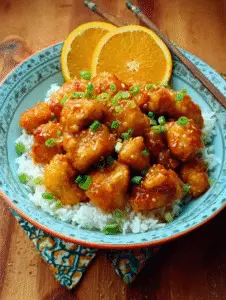
Orange chicken represents the evolution of immigrant cuisine:
Adaptation rather than imitation
Cultural exchange through food
Creation of a new culinary identity
It reflects how cuisine evolves when traditions meet new environments.
Buying and Ordering Orange Chicken
When ordering out:
Look for fresh citrus flavor
Avoid overly thick, syrupy sauce
Check that chicken is freshly fried
When cooking at home:
Use fresh oranges
Fry in small batches
Serve immediately
FAQs About Orange Chicken
Is orange chicken authentic Chinese food?
No — it is Chinese-American.
Is orange chicken spicy?
Usually mild, but spice can be added.
Can you make orange chicken without frying?
Yes, baking or air frying works.
Is orange chicken healthy?
In moderation, especially with lighter methods.
Final Thoughts
Orange chicken has earned its place as a modern classic. What began as an adaptation has become a globally recognized dish that balances sweetness, crunch, and citrus brightness. Its success lies in its accessibility, consistency, and bold flavor profile.
When made with care — using fresh citrus, proper frying technique, and balanced sauce — orange chicken can be far more than takeout. It can be a satisfying, crowd-pleasing dish that showcases the creativity of Chinese-American cuisine.