
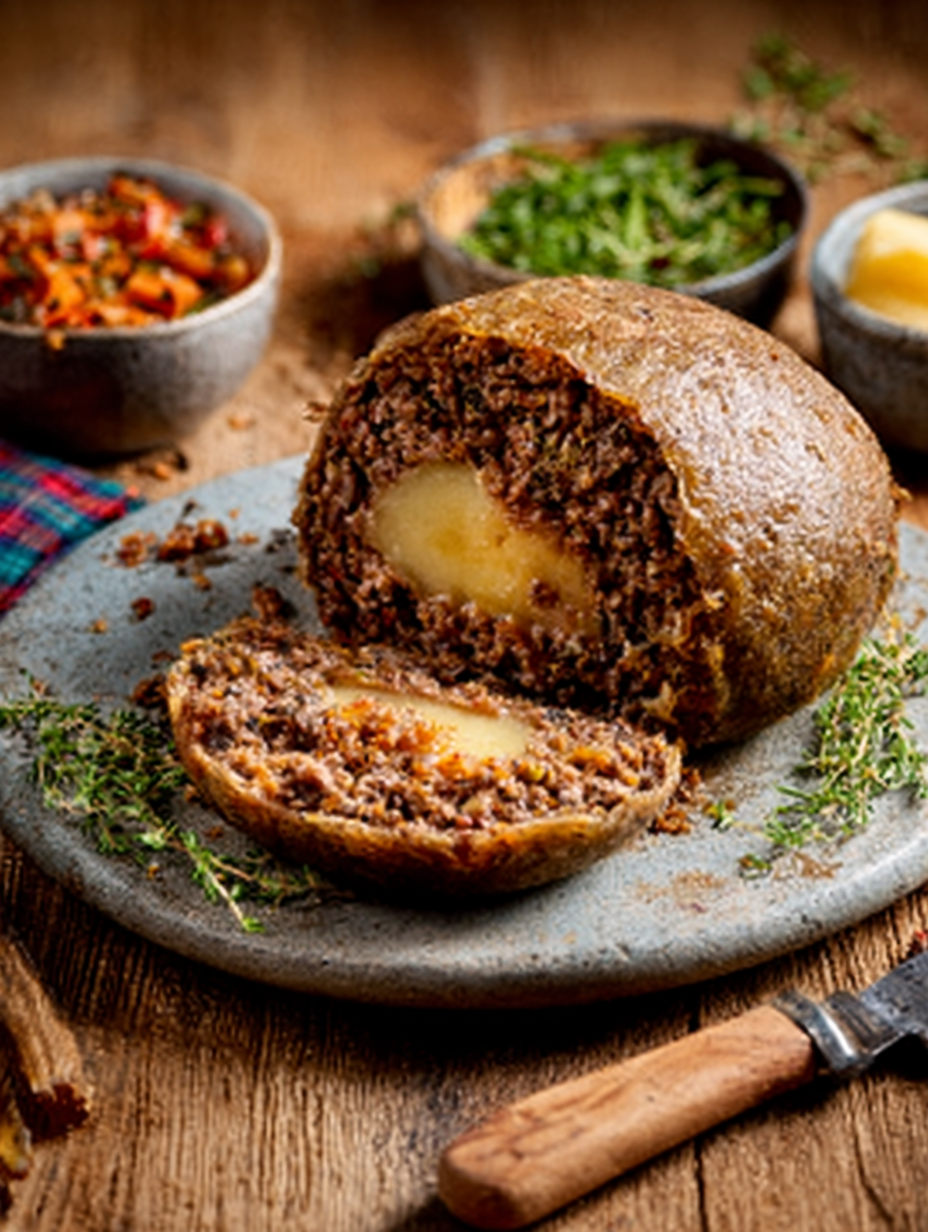
Simplified Haggis: The Easy Guide to Scotland’s Iconic Dish, Ingredients, Method, and Modern Variations
Haggis is one of the most iconic dishes in Scottish cuisine, yet it is also one of the most misunderstood. Traditionally made with sheep’s offal, oats, spices, and suet, haggis has a reputation for being intimidating, complex, or inaccessible to home cooks outside Scotland. This perception has led many people to avoid making it altogether — despite its deeply savory, comforting flavor.
Simplified haggis offers a practical and approachable alternative. By using easy-to-find ingredients and straightforward cooking methods, simplified haggis preserves the soul of the traditional dish while removing barriers such as specialty offal or complicated preparation. The result is a dish that remains rich, peppery, and hearty — but achievable in any modern kitchen.
To understand why haggis matters culturally and how simplified versions stay true to its roots, it’s useful to explore the origins of traditional haggis. A clear historical overview of haggis, its ingredients, and its role in Scottish identity can be found here:
👉 Haggis — History & Overview
Equally important is understanding the role of oats, which are central to both traditional and simplified haggis. Oats have long been a staple of Scottish cooking due to their availability and nutritional value, as explained in this authoritative resource:
👉 Oats — Culinary Uses and Nutrition
What Is Simplified Haggis?
Simplified haggis is a modern adaptation of traditional Scottish haggis that:
Retains the core flavor profile
Uses accessible ingredients
Avoids specialty offal
Is easier and faster to prepare
Instead of sheep’s heart, liver, and lungs, simplified haggis commonly uses:
Minced beef or lamb
Oats or oatmeal
Onion
Stock
Traditional spices
The result is a dish that is:
Savory
Peppery
Hearty
Comforting
While purists may prefer the traditional version, simplified haggis allows more people to experience the essence of this classic dish.
The Origins of Haggis and Why It Was Simplified
The Practical Roots of Haggis
Haggis was born out of necessity. Historically, nothing from a slaughtered animal was wasted. Offal was:
Nutritious
Perishable
Best cooked immediately
Mixing offal with oats and spices allowed Scots to:
Stretch limited resources
Create filling meals
Preserve flavor
Why Simplified Versions Emerged
Modern cooks face different challenges:
Limited access to offal
Cultural hesitation
Time constraints
As a result, simplified haggis emerged as a way to:
Preserve tradition
Adapt to modern kitchens
Introduce haggis flavors to new audiences
How Simplified Haggis Differs from Traditional Haggis
| Aspect | Traditional Haggis | Simplified Haggis |
|---|---|---|
| Protein | Sheep offal | Minced meat |
| Cooking vessel | Sheep’s stomach | Pan or pot |
| Preparation | Complex | Straightforward |
| Accessibility | Limited | Widely accessible |
Despite these differences, the spice blend and oat base maintain authenticity.
Core Ingredients in Simplified Haggis
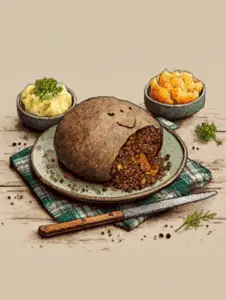
Understanding each ingredient is key to achieving authentic flavor.
Minced Meat
Beef or lamb are most common
Lamb offers closer traditional flavor
Beef is more widely available
Oats
Pinhead oats or rolled oats
Absorb fat and stock
Create hearty texture
Onion
Finely chopped
Adds sweetness and depth
Stock
Beef or lamb stock
Adds moisture and savoriness
Traditional Spices
Black pepper (essential)
White pepper
Nutmeg
Allspice
These spices define the haggis flavor profile.
The Flavor Profile of Simplified Haggis
Simplified haggis is not bland or subtle. Its flavor is:
Bold
Peppery
Savory
Slightly earthy
The oats provide texture, while spices add warmth rather than heat.
Texture
Soft but structured
Moist, not mushy
Similar to a savory meat pudding
The Science Behind Simplified Haggis
The success of simplified haggis lies in balance.
Oats absorb rendered fat and stock
Meat provides umami and protein
Onions contribute sweetness
Spices stimulate aroma and warmth
When cooked gently, the mixture becomes cohesive without drying out.
Classic Simplified Haggis Recipe (Step-by-Step)
Ingredients (Serves 4)
500 g minced beef or lamb
1 large onion, finely chopped
1 cup oats
1½ cups beef or lamb stock
2 tbsp butter or beef dripping
1 tsp black pepper
½ tsp white pepper
½ tsp nutmeg
Salt to taste
Instructions
Melt butter in a large pan over medium heat
Add onion and cook until soft
Add minced meat and brown thoroughly
Stir in oats and spices
Pour in stock gradually
Simmer gently for 30–40 minutes, stirring occasionally
Adjust seasoning and moisture
The finished simplified haggis should be moist but not soupy.
Common Mistakes to Avoid
Using too much liquid
Skipping spices
Overcooking until dry
Using instant oats
Serving Simplified Haggis
Traditionally, haggis is served with:
Neeps (turnips or swede)
Tatties (potatoes)
Classic Pairings
Mashed potatoes
Mashed turnips
Whisky sauce
Modern Serving Ideas
Haggis-stuffed peppers
Haggis shepherd’s pie
Haggis breakfast hash
Simplified Haggis for Burns Night
Burns Night (January 25) celebrates Scotland’s national poet, Robert Burns.
Simplified haggis is ideal for Burns Night because:
It feeds a crowd
It can be made ahead
It pairs perfectly with whisky
Even simplified versions honor tradition when served with respect.
Nutrition and Health Considerations
Simplified haggis is nutrient-dense.
Nutritional Highlights
High protein
Complex carbohydrates from oats
Iron and B vitamins
Oats contribute fiber and slow-release energy, making this dish filling and satisfying.
Healthier Adjustments
Use lean minced meat
Reduce added fat
Increase onion content
Vegetarian and Vegan Simplified Haggis
Vegetarian versions are increasingly popular.
Common substitutes:
Lentils
Mushrooms
Nuts
These versions retain:
Peppery spice profile
Oat-based texture
Cultural Significance of Simplified Haggis
While not traditional, simplified haggis plays an important role:
Preserves cultural memory
Encourages global participation
Keeps tradition alive through adaptation
Food traditions survive by evolving.
Buying vs Making Simplified Haggis
Store-Bought
Convenient
Consistent
Less customizable
Homemade
Full control of flavor
Adjustable texture
Fresh ingredients
Homemade versions offer the best balance of authenticity and quality.
Comparing Simplified Haggis to Similar Dishes
| Dish | Base | Flavor |
|---|---|---|
| Simplified haggis | Meat + oats | Peppery |
| Meatloaf | Meat + breadcrumbs | Mild |
| Black pudding | Blood + grains | Rich |
FAQs About Simplified Haggis
Is simplified haggis authentic?
It preserves flavor but simplifies ingredients.
Can I freeze simplified haggis?
Yes — freezes well for up to 3 months.
Does it taste like traditional haggis?
Very similar in spice and texture.
Is it spicy?
Peppery, not hot.
Storage and Reheating
Refrigerate up to 3 days
Reheat gently with a splash of stock
Avoid microwaving uncovered
Modern Uses for Simplified Haggis
Creative uses include:
Stuffed mushrooms
Savory pastries
Pizza topping
Breakfast rolls
These adaptations introduce haggis flavors to new audiences.
Final Thoughts
Simplified haggis proves that tradition does not have to be rigid. By removing barriers while preserving flavor, this dish allows anyone to experience the warmth, history, and satisfaction of Scotland’s most famous food.
Whether served on Burns Night or as a comforting dinner, simplified haggis offers authenticity through adaptation — honoring the past while embracing the present.